
How to Turn a Repeated Task Into a Simple Workflow
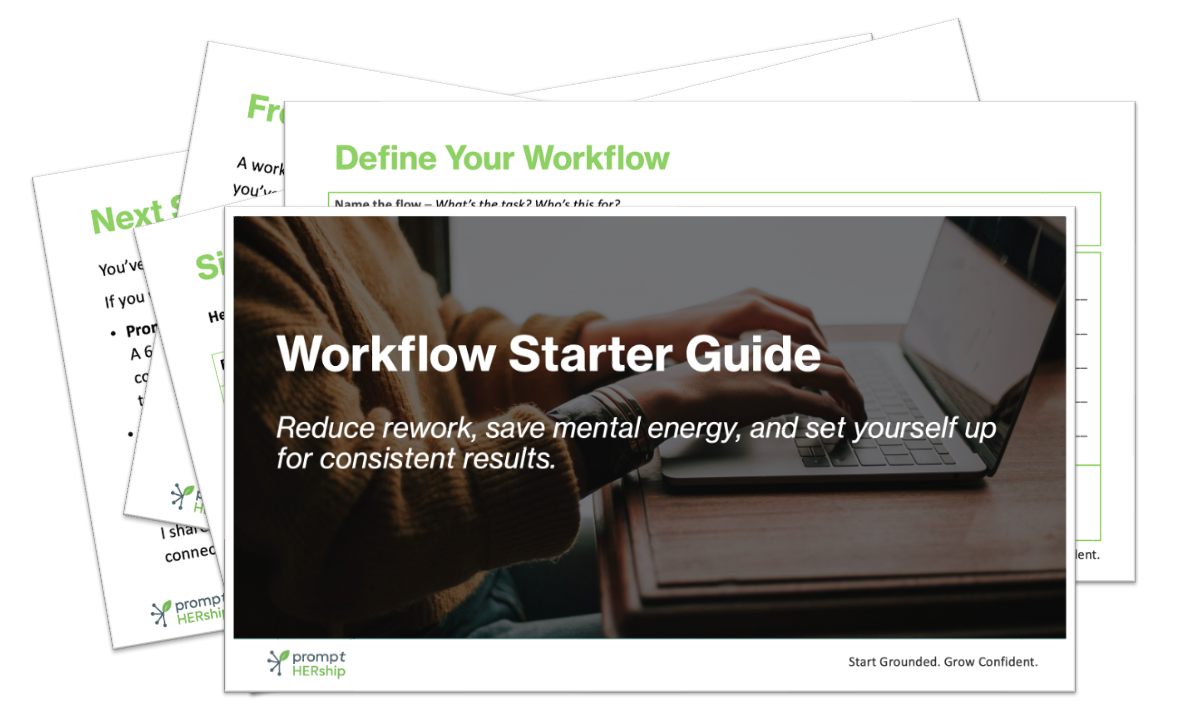
Most leaders use AI to fix one-off tasks — rewriting an email, summarizing meeting notes, cleaning up a report. The problem? It doesn’t save much time. You end up prompting, re-prompting, and starting from scratch every time.
If you want consistent results, you need something different: simple workflows.
A workflow is a small task you repeat most weeks. You probably follow the same steps every time, even if you’ve never written them down.
Here’s a quick way to spot one and make it lighter.
1. Pick a task you repeat every week
Choose something small. Not a whole project — just a task you touch often.
A few examples leaders mention all the time:
Meeting prep
Writing updates
Client follow-ups
Feedback conversations
Program/session planning
The important part is that it’s something familiar.
2. Break it into the steps you already take
Most tasks have a rhythm:
Gather notes or context
Identify the goal or themes
Draft your message or talking points
Revise for clarity and tone
Share it with the person who needs it
Once you see the steps, the work stops feeling messy. You can finally see where the friction is coming from.
3. Notice the step that drains the most energy
That’s your entry point for AI.
For some people, it’s sorting through notes.
For others, it’s drafting.
Sometimes it’s turning ideas into a clear update.
You don’t need AI to do everything — just the part that slows you down.
Try it with your own task
I’ve created a simple worksheet that walks you through these same three steps. It takes five minutes and helps you map your first workflow in a way you can repeat.
If you try it, feel free to share what task you chose — I love seeing what leaders uncover once they start noticing their own workflows.